
Oconto County Deed Types and Their Use
Every deed is a recorded instrument that conveys an interest in real property. In Oconto County, warranty and quitclaim deeds handle most transfers. The label never tells the whole story. A warranty deed carries promises about title. A quitclaim deed passes along whatever interest the grantor holds, with no such promises attached. Special and grant deeds also appear in some transactions. The granting language, names, signatures, legal description, and recording stamp on the actual document matter more than the form's title. So read the instrument itself.
| Instrument | What it can show | What to check |
|---|---|---|
| Warranty deed | Conveyance with title covenants | Grantor, grantee, land description |
| Quitclaim deed | Transfer of the grantor's interest | Whether the grantor held the full interest |
| Mortgage and release | Security interest and later satisfaction | Search for a matching release |
| Easement or restriction | Use rights or limits affecting land | Exact tract and recorded terms |
| Probate affidavit or deed | Estate-related transfer | Compare court and deed records |
Deeds rarely sit alone in the record. Mortgages, liens, easements, certified survey maps, plats, assignments, and satisfactions all share the same shelves in Oconto County. Tax-deed instruments sit there too. A mortgage filing proves the instrument was recorded, not that a balance remains today. Before treating an old entry as active, search for the satisfaction or release that closed it out.
Oconto County's Grantor and Grantee Trail
A grantor gives or conveys an interest, and a grantee receives it. Chain work in Oconto County starts with the newest deed. Read the grantee name as your next search target. Then find that party's earlier acquisition. There they appear as grantee again. Repeat the process. Match the legal description and recording date at every step. A name match alone is weak evidence. Two people can share a name, or an entity may use a shortened form.
The Register of Deeds relies on a tract-based index. It is not a simple PIN or PLSS index. That means a current parcel search may not surface an older instrument by parcel number. For the historic range, a volume and page or document number can be essential. Note each reference as it appears on the deed. Record the grantor, grantee, instrument type, recording date, and land description together. Keep the chain in date order so gaps stand out clearly.
Oconto County deed records support a backward chain, but parcel splits complicate the trail. When a parent parcel became several lots, switch to the parent description. Then locate the survey or plat that divided it. For prior owners across those changes, see the former owner chain method.
LandShark and Older Oconto County Records
The Oconto County Register of Deeds connects the public to LandShark. It is the office's recorded-document search and image system. County planning materials describe an image reach back to 1838. Records from 1980 forward carry full indexing. Older instruments, from 1838 through 1979, open by document number or by volume and page. Staff keep building the name index. That long image span does not promise every early owner of record appears in a keyword search.
Field labels, date controls, and result limits on the live portal can shift. When an old deed resists a name search, work from the volume and page printed on any later instrument. A document number works too. Office staff can also steer you through the older books. The public counter sits at 301 Washington Street in Oconto, open weekdays from 8:00 to 4:00. The phone is 920-834-7113.
The Oconto County LandShark portal is the direct online entry point. The Register of Deeds also maintains a Register of Deeds page. It collects the portal link, office forms, and a fraud-notification service. Follow that official county route whenever a saved favorite or a paid notice points somewhere else.
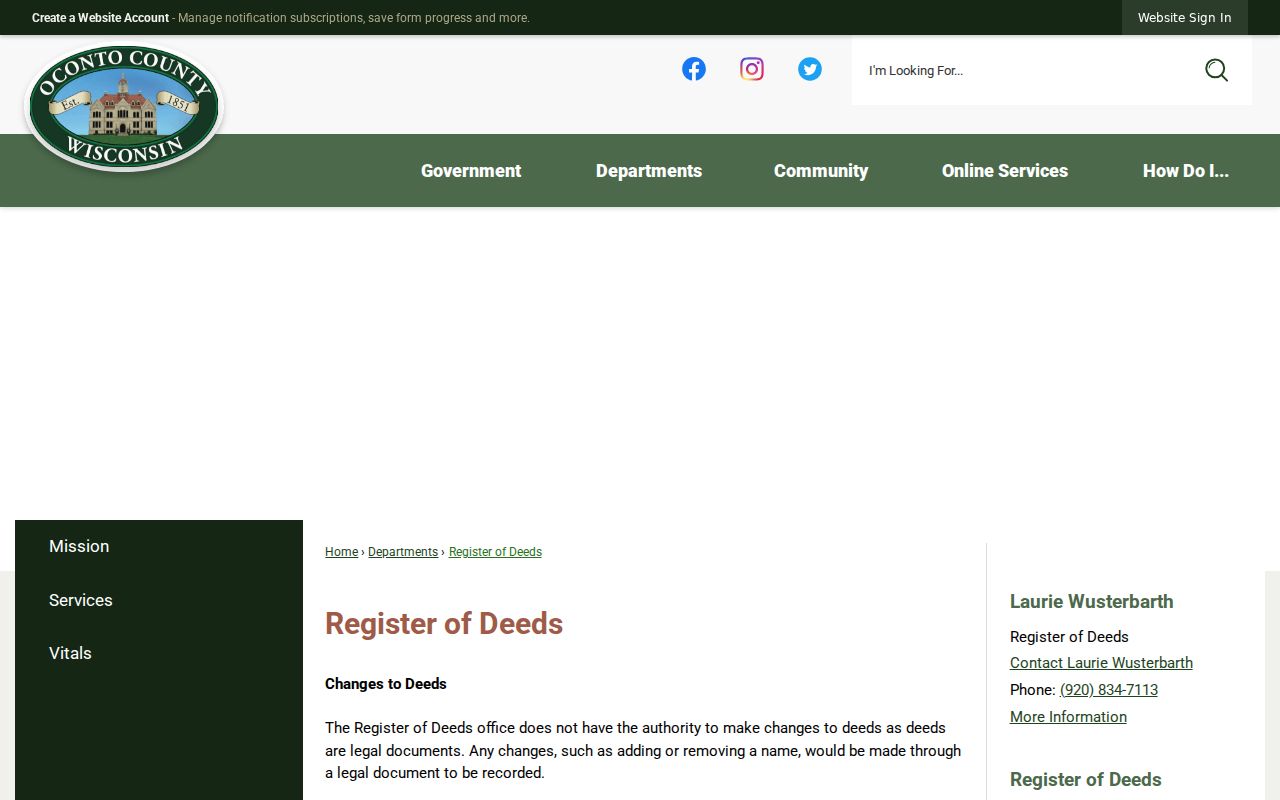
At the counter, give the property address and owner names. Bring a known volume/page or document number for old tracts. Staff there also handle certified copies and recording questions.
Getting a Copy of an Oconto County Deed
Copies flow through LandShark's document image route. The county lists an online copy price of $2 for the first page. Each added page within a document costs $1. A $5 convenience fee applies to each session. Online purchases cap at $50. A monthly subscription runs $475 for up to 2,000 images. Each extra 1,000 images costs $100. Fees change, so confirm charges at checkout. Recording fees and certification charges are separate. The Register of Deeds publishes those schedules directly.
A blurry image has a fix. The official counter can explain the process for a plain or certified copy. Mail and open-records requests should pin down the instrument as tightly as possible. Include names, approximate date, document number, and volume/page. Ask for an estimate before extensive search work begins. Wisconsin's Open Records Law permits charges for copying, reproduction, location, and mailing. Route a certified deed through the Register's process. A broad request to another county department is not the right channel.
The deed records portal entry appears in the image below. Use the linked LandShark search and purchase site for current access terms. The image shows the portal route itself, not any particular deed or fee schedule.
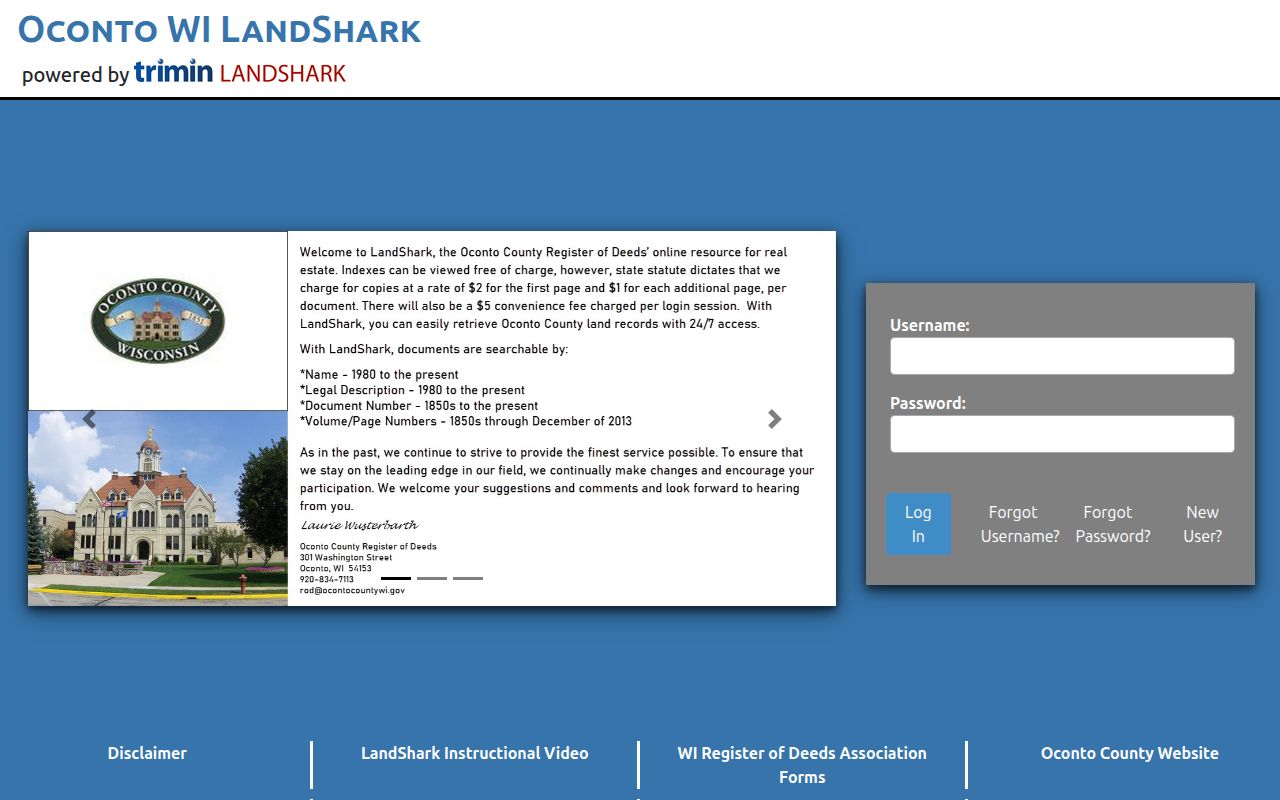
Pull the instrument through the portal's document reference. Then compare its legal description against the current parcel.
Mortgages, Releases, Easements, and Liens
A deed alone never finishes ownership research. The Register's index holds more than deeds. Search it for mortgages, assignments, satisfactions, releases, judgments, easements, restrictive covenants, liens, lis pendens, and tax-deed instruments, and never assume that every filing under one surname touches the same parcel. Match the names and the land description each time.
A mortgage is a recorded security instrument. Check for a later release or satisfaction. A mechanic's lien can appear twice. It may sit in the deed index, a court file, or both. Wisconsin's Uniform Commercial Code filings are a separate source, and they do not establish real-estate ownership. An easement may affect use but not ownership. When an instrument covers only part of a tract, rely on its legal description and any attached map.
Register staff cannot advise an owner on drafting or changing a deed, as the county states plainly. That interpretation belongs with an attorney. For a title-grade review, order the full instrument and check the related releases, judgments, and surveys against Oconto County deed records.
Probate Transfers and Oconto County Filings
Death changes how a parcel moves. Oconto County property can pass through a probate estate. It can also pass through a trust or a statutory affidavit instead of a standard sale deed. The Register's page offers the HT-110 Termination of Decedent's Interest form and transfer-by-affidavit materials. Other instruments include personal-representative deeds, trustee deeds, and probate judgments. The label is only a clue. Compare the land description against the current tax record. Check the parcel number against the map record too, before drawing conclusions.
Wisconsin Circuit Court Access, known as CCAP, points to probate filings and foreclosure cases. It also covers quiet-title actions, partition disputes, and other land matters. The docket is not the file. Request pleadings, judgments, exhibits, and orders from the Oconto County Clerk of Circuit Court. Then check the Register of Deeds for the recorded instrument. Death certificates are restricted vital records, not a shortcut. Eligible copies come from the Register or Wisconsin Vital Records under separate rules. Obituaries and cemetery records offer family-history leads. They are not evidence of a conveyance.
The Wisconsin Circuit Court Access search is the statewide case index. For certificate access and ordering instructions, use the Wisconsin Vital Records office page. Its eligibility rules sit apart from deed access.
The screen below opens the case-search route. The Wisconsin Circuit Court Access system supplies the docket lead, while the Clerk of Circuit Court holds the full court file.
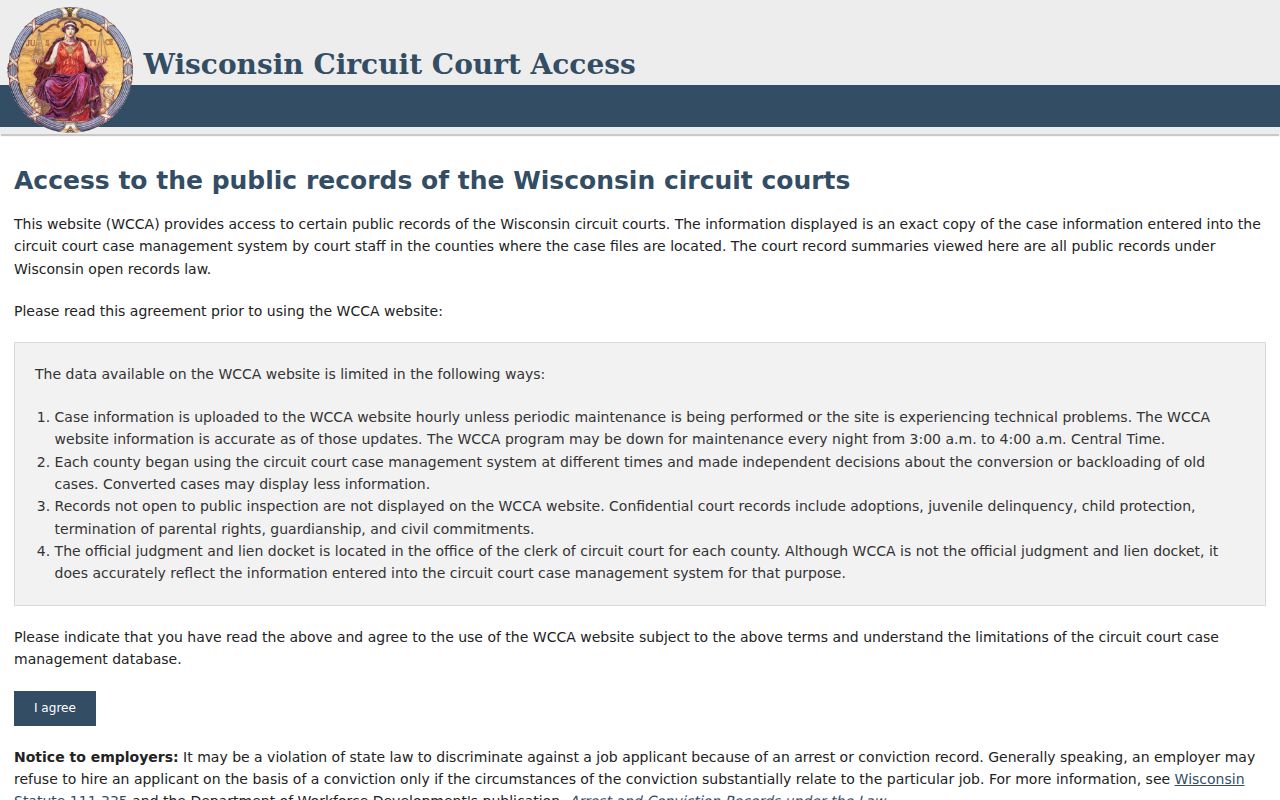
Treat the docket as a pointer. Contact the Oconto County Clerk of Circuit Court for the complete file and the recorded outcome at the Register of Deeds.
Historic Deed Books and County Land History
Oconto County was carved from Brown County in 1851, and Oconto became the county seat. Its land record begins in a landscape shaped by federal surveys, river travel, timber operations, and later city plats. Early descriptions often point to a government lot, a section, a river edge, or a named tract instead of a street address. Keep those phrases exactly as written. Then connect them to a current parcel.
Farnsworth Public Library keeps plat books for 1905, 1912, 1938, 1958, 1967, 1978, 1984, 1989, 1992, 1994, 1997, 2001, 2003, 2007, 2010, 2013, 2015, 2018, 2022, and 2026, with gaps between editions. Its 1912 atlas can help locate an old road, owner, or lot. A plat book is only an orientation aid. The recorded deed and survey control the legal description. Library directories may suggest who occupied an address. They cannot fill a gap in the deed chain.
Older volumes take extra help. Ask the Register of Deeds about bound books, scans, and the finding aid for the tract. Staff can confirm the first deed-book year. Oconto County property records reach deep into the timber era, well before any online index begins.
Tax Foreclosure and Deed Changes
Tax foreclosure can change title, but a tax certificate alone is not a deed. Oconto County issues a certificate on September 1 for amounts unpaid as of August 31, including taxes, interest, penalties, special assessments, or special charges. If the debt remains unpaid two years later, the county may pursue in-rem foreclosure under Wis. Stat. §75.521 and Ordinance O2021-02-01. The described process gives at least eight weeks to redeem and requires notices to interested parties, municipalities, and the local newspaper.
A case result should be cross-checked for its judgment date, redemption status, and any recorded transfer. County land-sale parcels are offered through Wisconsin Surplus Online Auction, with sale lists in the Oconto County Reporter for three consecutive weeks. Bid closings are monthly, the Administration Committee reviews offers, and Corporation Counsel handles deed/title-transfer questions. Status changes; a captured notice is not a current inventory.
Use the county Treasurer's tax pages, CCAP, and Register of Deeds together. A judgment may transfer title to the county subject to stated exceptions such as easements or mineral rights. Confirm the final instrument before treating a prior owner's chain as ended.
Reading Oconto County Deed Records Carefully
A deed index is a finding aid, nothing more. It cannot promise that every interest was recorded. Nor can it promise that the owner of record listed is still current. It does not clear a parcel of hidden claims. Oconto County deed records can flag a recent transfer that explains a tax-roll lag. Yet a real title conclusion demands the full chain of deeds and a professional review. Parcel splits, estate transfers, old tract-based indexing, and unreleased instruments each reward careful matching. Match each one before you trust a single line.
Recorded is not the same as reviewed. The Register records and supplies instruments; staff do not give legal advice or alter a deed. Do not rely on a search result as a title opinion.
Certified copies come from the Register of Deeds at 301 Washington Street, or through its official LandShark link. If a deed-copy solicitation looks suspicious, check it against the county's published number, 920-834-7113, rather than any number printed on the letter itself. Hang onto the recording date and document reference whenever you keep a copy. Those details tie your copy back to the official record. Old index gaps in a chain call for patience. Ask for help at the counter, and treat the library's plat and newspaper holdings as context only. The deed image, the survey, or a court order remains the primary evidence. A directory entry or a map label is no substitute for any of those.