
How to Find Who Owns an Oconto Parcel
Start with the street address in the GCS Web Portal. The parcel record opens from there. Note the owner name, parcel number, property address, and any deed reference the card lists. Then check the Register of Deeds index. Confirm the most recent recorded transfer and its grantee. An entity owner needs one more step. Run its exact legal name through the Wisconsin Department of Financial Institutions search, and treat the combined checks as the public owner record rather than any single screen.
- Search the address or owner name in the Oconto County GCS portal.
- Confirm the result by its municipality, site address, and parcel number.
- Read the owner field and mailing address as separate pieces of information.
- Search LandShark for the latest deed and check the grantee and legal description.
- If an LLC or estate is named, follow the entity or probate record where relevant.
The address-to-owner method shows who the county lists. A deed check catches later transfers. For the present-tense picture, the current owner record page focuses on the tax roll and its update limits.
Where Oconto County Owner Data Appears
Several Oconto County records can name an owner, and each carries a different purpose and date. Start with the tax roll. The deed index confirms the legal conveyance behind it. A map popup helps carry the parcel number across systems, while a court file matters when an estate, foreclosure, or quiet-title case clouds the chain of title.
| Source | What it contributes | How current to treat it |
|---|---|---|
| GCS / tax parcel | Owner name, site and mailing address, parcel and tax details | Live tax data, but sale lag is not measured |
| SOLO GIS popup | Owner Name 1/2, owner address, property address, GCS link | Map-linked record; check date and deed |
| LandShark deed | Recorded transfer and named parties | Check latest instrument and related filings |
| CCAP case index | Probate, foreclosure, or title-dispute docket lead | Request the full file from the clerk |
Oconto County describes its GCS and SOLO systems as linked through parcel numbers. The Register's LandShark route sits separate. A deed can be newer than the tax roll, and a court docket can reference an order missing from the parcel card. Note the office and date behind each answer.
Owner Names on the Oconto Parcel Card
The GIS popup lists Owner Name 1 and Owner Name 2. It also gives the owner mailing address and the property address. The county's Land Information description says linked records may include parcel size, a brief legal description, tax status, tax bills, and a deed reference. Those fields tie the map to the tax account. They do not rule out a later transfer, lien, or court order.
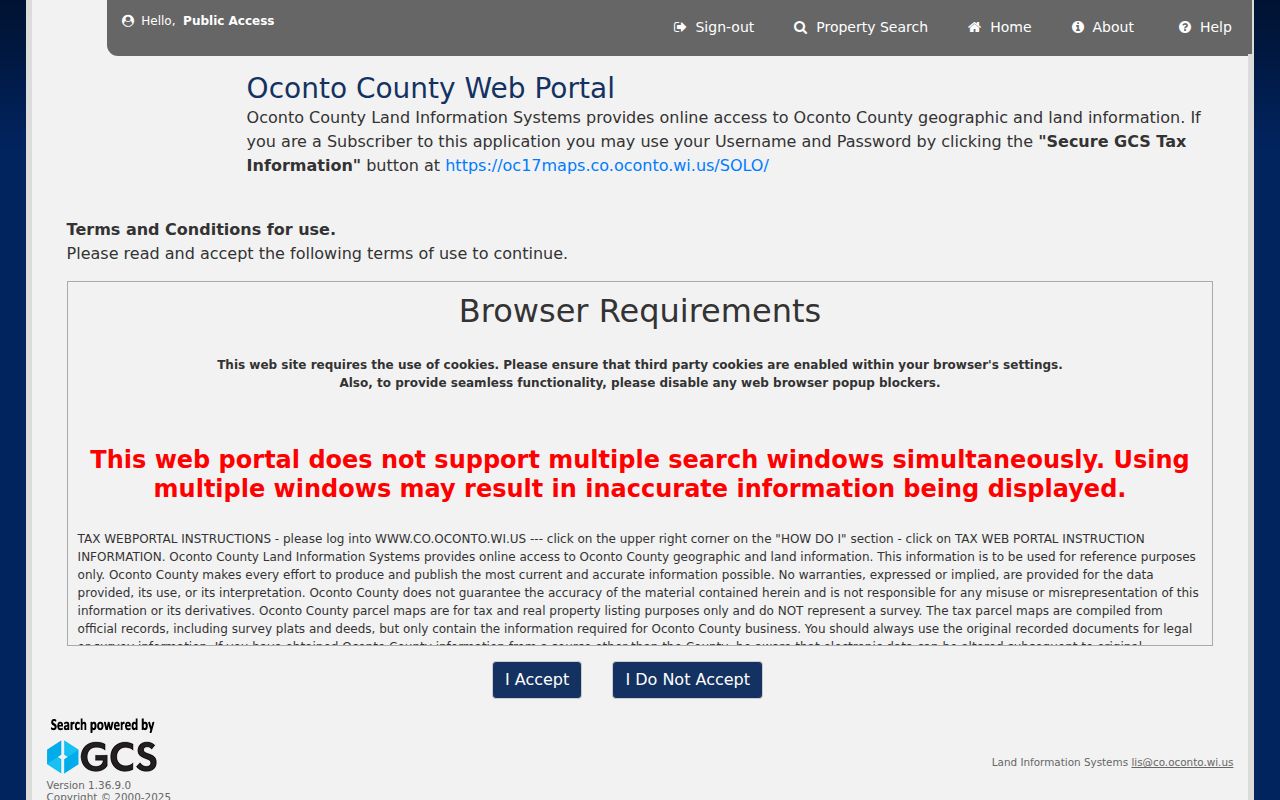
Visit the Oconto County GCS portal for the parcel search. The county search page displays its entry fields. It is not a sample person's record. Results may abbreviate an owner name or show two owners. LLCs and trusts appear often in Oconto County. An entity can hold the parcel. When one does, the tax roll carries the entity's name rather than a person's.
Match the parcel and site location before trusting a name. Common surnames trip people up. Compare the deed, municipality, and legal description instead of assuming the first matching record fits the property.
Mailing Address Is Not the Situs
Situs means the physical place where the land sits. The mailing address gets the tax bill. Oconto County's portal splits the physical address into house number, direction, street name, street type, and suffix direction, while the map popup keeps separate owner-address fields. A bill may go to a PO box, a rural route, or a home in another county. Both addresses serve different purposes. That split is normal, not a mismatch.
Use the site address to find the parcel first. Then read the mailing address as a contact clue only. A postal city or ZIP alone cannot settle whether a property sits inside Oconto, Oconto Falls, Gillett, or a surrounding town. County municipality selectors and mapped boundaries give better evidence of jurisdiction.
Owner of record does not mean occupant. Wisconsin's Safe at Home program can withhold or substitute address information for protected participants. Respect a withheld address. Contact the record custodian about the correct privacy process rather than trying to infer a protected location.
Confirming an Oconto County Deed
A parcel card can lag behind a recently recorded transfer. The county publishes no measured closing-to-roll update period. When the date matters, open the newest deed in LandShark and compare its grantee and legal description with the parcel. Check for a later conveyance, personal-representative deed, trust deed, or court order. Keep the volume and page or document number.
Oconto County scans deed images back to 1838. Documents from 1980 forward are fully indexed. The 1838 to 1979 image range is reachable by document number or volume and page while staff continue back-indexing. A name-only search can therefore miss an older instrument. The Register of Deeds counter sits at 301 Washington Street, open Monday through Friday from 8:00 to 4:00. Call 920-834-7113 about older references and certified copies.
Staff provide records but cannot alter a deed or draft one for an owner. A title company or attorney can interpret the chain. Read the full instrument rather than trusting the index line alone.
LLCs, Trusts, and Estate Owners
An Oconto County parcel record sometimes lists an entity instead of a person. That name is the owner of record in the system, nothing more. It does not reveal who controls the LLC or who benefits from a trust. For companies, the Wisconsin DFI Corporate Registration Information System shows the registered name, agent, and filings. Keep in mind that a registered office is often just an address for mail. It may have no tie to the parcel itself. Use the official Wisconsin DFI entity search before drawing conclusions about a company owner.
When a death is involved, the paper trail shifts to the probate side. The Register of Deeds handles the HT-110 Termination of Decedent's Interest and transfer-by-affidavit materials. The deed record may show a personal-representative deed. It may also show a trustee deed instead of a standard conveyance. CCAP can point you to a probate case. The public docket never holds the whole file, though. For pleadings or orders, ask the Clerk of Circuit Court. Then compare the document's legal description against the GCS parcel. That keeps the property records line up.
Vital records play by their own rules. Certified birth, death, marriage, and divorce records from October 1907 forward are restricted. Relationship and identification requirements apply. An obituary or cemetery entry can hint at a family connection. It still cannot prove who owns a property. The Oconto County Genealogical Society's surname material is a history lead, not an owner register. Above all, never assume an entity's agent lives at or controls the parcel.
When Oconto Ownership Records Lag
Oconto County tax rolls exist for assessment and billing. They rarely update the instant a deed is recorded. The county publishes no official statement of the exact lag. So the answer to who owns it now can depend on which record you ask: the assessor's current listing or the latest recorded conveyance. Whenever you share an answer, state the source date.
Parcel splits create a second kind of mismatch. One historic parcel can become several current records. A current parcel may also carry a description that no longer matches the old lot. When the chain changes shape, follow the parent description, plats, and surveys. The county parcel number works well as a cross-office key, but the static portal does not document its exact format.
A name search with no match is not the end. Toggle between current and historical property views. Try legal-name variants, then search by address. If nothing surfaces, ask the Register or Land Information office for help with the reference. A missing online hit never proves that an instrument went unrecorded.
Responsible Oconto County Owner Research
Owner names and tax information stay open to the public under Wisconsin's Open Records Law, Wis. Stat. §§19.31-19.39, subject to specific exceptions. That openness does not turn a parcel record into a directory of residents. The voter lookup is limited in what it shows. Vital records carry their own access rules. When a record is withheld or protected, follow the custodian's procedure.
Owner name is not proof of title. Confirm the latest deed and related instruments. A public owner lookup is for property research, due diligence, and civic use; do not use names or addresses to stalk, threaten, or harass anyone.
Start an Oconto County ownership question with the tax record in GCS. Then pull the deed through LandShark. A company or a dispute may be involved. The state DFI entity search and CCAP can fill in the picture. The Register of Deeds office page posts contact details and document links. It also offers a fraud-notification route for anyone who wants one. For formal title work, order the full recorded instruments. Then have a qualified professional review the chain.