
Live Oconto County Tax Information
The county describes a recent software integration. It says its public system now displays live, current tax information. The entry point offers tax detail, assessment information, payment history, e-bills, and bill images for 2025 and earlier. It is a good place to see what the record says right now. Fields and links can shift as the software changes. So start from the official Property Taxes page instead of an old saved address.
Search first by parcel number or site address. Then compare the result's municipality, property address, and owner details before acting. A mailing address can sit outside Oconto County. The city in a postal address does not always identify the actual tax collector. Save a copy of the bill or note the date you checked. That note helps separate a current amount from an older bill image. It also separates a payment-history line.
Tax data and title data do different jobs. A live tax account does not prove who holds title. If a recent sale has not reached the roll, verify the newest deed at the Register of Deeds.
What Oconto County Tax Records Show
A tax record can show the parcel and the assessed value. It also covers tax detail, bill history, and payment status. The county says its live portal links tax information with assessment details. Municipal assessors set the assessed values themselves. A bill image is a dated notice, nothing more. It is not a promise about today's balance. Check the live account for current payment history. Use the image to understand a prior year or an earlier installment.
| Record item | What it helps answer | Confirm with |
|---|---|---|
| Assessment detail | Value on the tax roll | Municipal assessor and DOR context |
| Bill image | Charges billed for a tax year | Live account for current balance |
| Payment history | Recorded payment activity | Treasurer if a receipt is in question |
| Tax status | Current or delinquent account clue | County Treasurer notice or certificate |
| Parcel number | Cross-office record key | GCS and SOLO map |
The county publishes no complete fixed list of result-card fields. No itemized exemption display appears for every parcel. Read the actual bill. Ask the local assessor or Treasurer about any line that is unclear. For property search mechanics, use the county GCS portal. Carry its parcel number into the tax system.
County or Municipal Treasurer?
Where a payment goes depends on the tax stage. Current-year bills generally go to the local municipal treasurer by January 31. Delinquent taxes and second-installment payments run through county channels. That split matters in a county with three cities plus villages and towns. Read the bill's instructions and check the named municipality before mailing a check. Never infer the recipient from a postal city alone.
The Oconto County Treasurer sits at 301 Washington Street in Oconto. The office can be reached at 920-834-6813. The county property-tax page points current-year taxpayers to local municipal collection. It also describes the county path for delinquent or later installments. For mail payments, the county says to send a check to the Oconto County Treasurer. Include a self-addressed stamped envelope if you want a receipt. In-person service is available during office hours.
A payment sent to the wrong office can cause delay. If the bill is unclear, call the Treasurer or the named municipality before paying. Keep the parcel number, tax year, and installment handy when you call. Staff can then find the right account fast.
Oconto County Payment Fees and Bill Images
The payment page lists e-check at $1.50, debit at $3.95, and credit at 2.39 percent. Confirm the current total at checkout before paying. Check by mail and in-person payment are also described. For a mailed receipt, include a self-addressed stamped envelope. Keep a confirmation or cleared-check record after any payment. A deadline or delinquency may make that record essential.
Oconto's bill-image access covers 2025 and earlier bills. A prior bill shows what was assessed and billed in a past year. It cannot tell you whether that amount was later adjusted or paid. Pair the image with the live tax account and its payment history. A property may have changed hands. In that case rely on the parcel record, not the owner name printed on an older bill.
The county's tax-payment entry point displays the live options, fee details, and the current bill-image route. All of this appears on the official Oconto County tax page. That portal page is a reference, not a bill for any particular parcel.
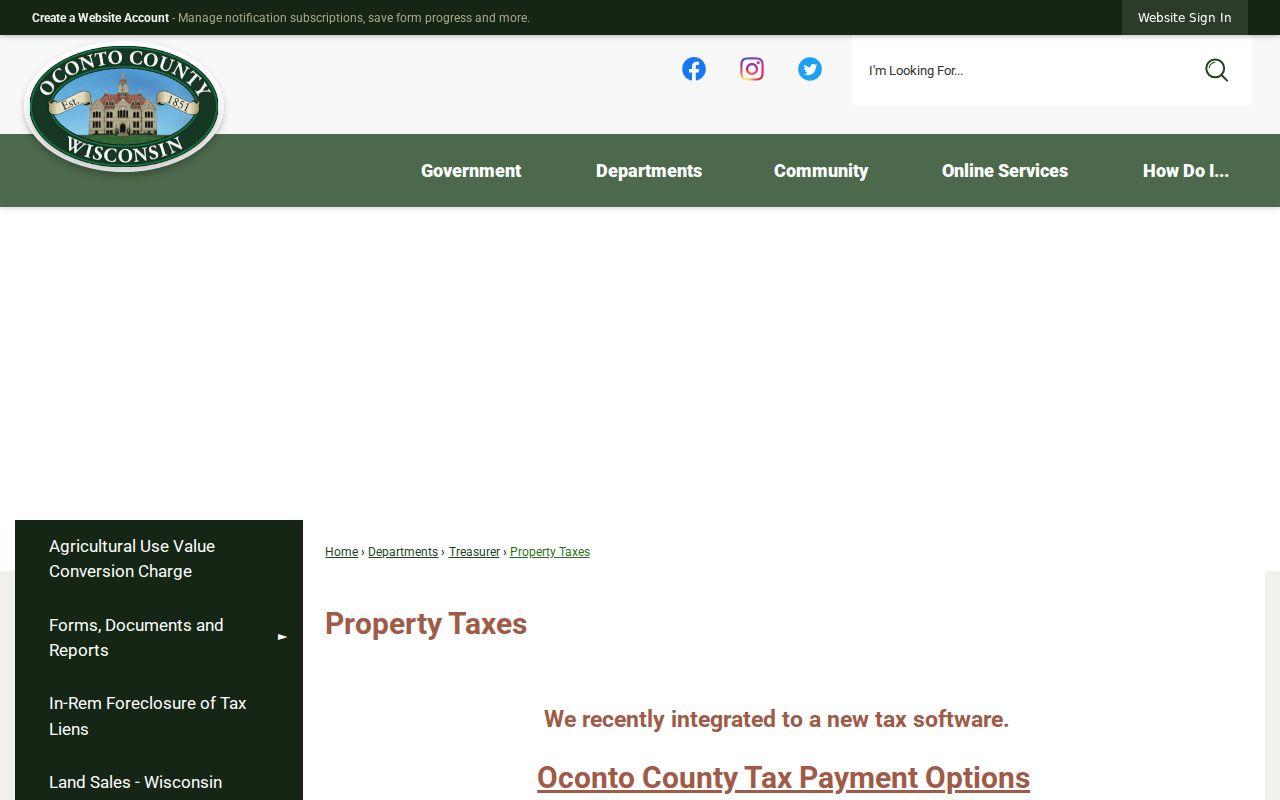
Check the live parcel account before assuming an older bill image is current, since a payment may have posted after that bill was generated.
Delinquent Tax Certificates in Oconto County
Oconto County issues a tax certificate on September 1 for parcels with taxes, interest, penalties, special assessments, or special charges unpaid as of August 31. A certificate is an important delinquency record, but it is not the same as county ownership. The county's in-rem process may begin if the amount is still unpaid two years after the certificate. Notices go to interested parties and municipalities and are published in the local newspaper.
The county's foreclosure page describes redemption time of at least eight weeks in the process under Wis. Stat. §75.521 and Ordinance O2021-02-01. Check the case and notice dates; do not calculate a deadline from a tax-bill date alone. A court judgment is the key step that transfers title to the county, subject to stated exceptions such as easements or mineral rights.
Use the tax portal to see the account, the Treasurer's in-rem page for the procedure, CCAP for a court docket, and the Register of Deeds for a final instrument. The county's tax-lien foreclosure instructions explain certificates and notices. The captured page gives context for what happens after unpaid charges remain open.
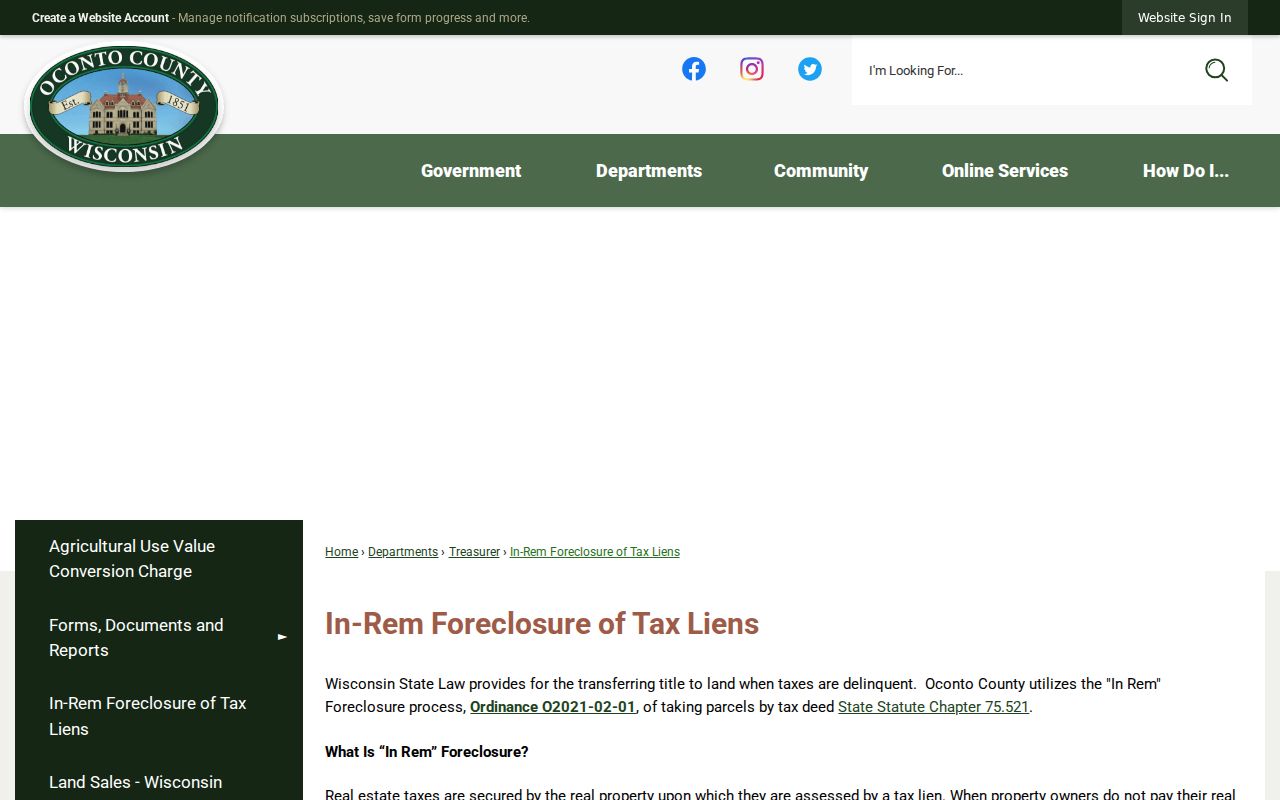
Check the certificate and case dates with the Treasurer before calculating any redemption deadline.
Oconto County Tax Sales and Auction Notices
Once a foreclosure is complete, county-owned parcels may reach the market. That route runs through Wisconsin Surplus Online Auction. Oconto County publishes its sale lists in the Oconto County Reporter. The notice runs for three consecutive weeks. Bids close on monthly deadlines, and the Administration Committee reviews each one. Corporation Counsel fields deed and title-transfer questions at 920-834-6960. Because listings change, confirm current availability with the county before acting on any auction date.
A tax certificate alone does not put a parcel up for sale. Confirm a foreclosure judgment has been entered. Confirm redemption has closed. Confirm a final deed has been recorded. A sale notice and an assessor value do not replace review of title terms. For a distressed parcel, compare the tax account and the court file. Then weigh the auction notice against the recorded Register of Deeds instrument.
The Oconto County land sales page explains the county's auction route. It runs from listing through bid review. Availability shifts fast.

Always check the current land-sales page before relying on an auction date. Available parcels and bid deadlines change without much notice.
Assessment Values and Oconto County Bills
An assessment is a value set for taxing property. It is not an appraisal. The municipal assessor establishes the assessed value, and Oconto County's tax system ties that assessment to the parcel. Wisconsin Department of Revenue materials explain assessment ratios, and the Department's aggregate-ratio reports show how assessed values compare with market indications across a municipality or the county. They offer no value opinion on a single house.
A ratio report can explain why a tax assessment and a recent sale price differ. Check the exact ratio for your municipality and reporting year. Timing matters too. For a correction or appeal, contact the assessor named for that municipality and ask for the applicable notice, evidence, and deadline. Never borrow an appeal window from another locality.
Value interpretation and sale-price comparisons get separate treatment on the Oconto County property value page. The tax page's job is narrower. Read the billed amount first. Then follow the payment route and check the account status. The Wisconsin DOR aggregate-ratio reports supply statewide and local valuation context.
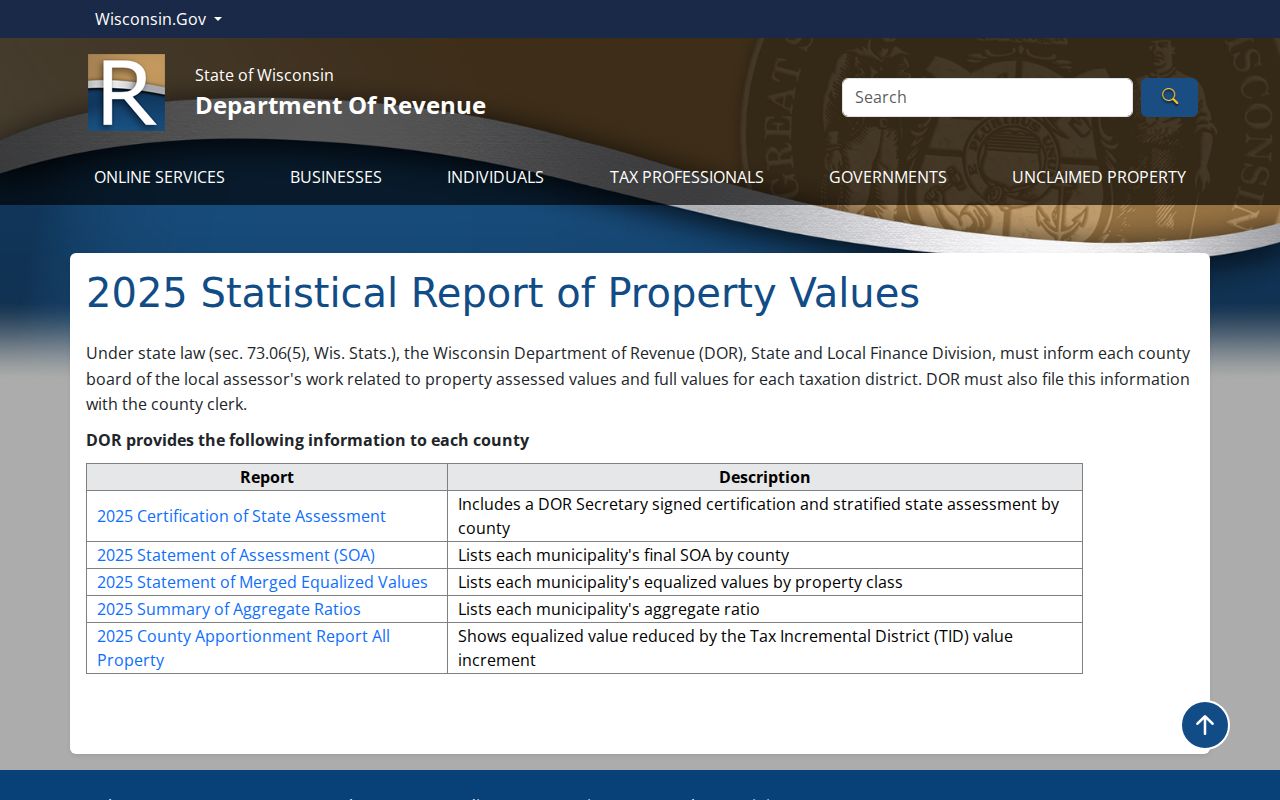
Use a ratio report for broad context. Then ask the municipal assessor about the value on one parcel.
Oconto County Tax Record Access and Requests
Start online, then move to the right custodian for whatever is missing. The county page offers live tax detail and bill images. The municipal treasurer handles the current-year bill. The County Treasurer handles delinquent accounts and second-installment payments. Questions about assessed value belong with the municipal assessor, and questions about a recorded conveyance belong with the Register of Deeds.
Wisconsin Open Records Law, Wis. Stat. §§19.31-19.39, allows a written request without any special form or stated reason. Name the property. Name the tax year, record type, and the exact detail sought. Authorities may charge copying, reproduction, location, or mailing costs, and search work above $50 may carry an hourly charge under agency policy. Ask for an estimate on an extensive request. Responses must come as soon as practicable and without delay. No single fixed deadline applies to every request.
Keep the question precise. Ask for a bill image, payment history, assessment detail, or foreclosure notice by parcel and year. That helps the custodian separate a current balance from an old image.
For the tax amount, use the live account. For a transfer, use the deed. For value meaning, use the assessor and DOR context; these records fit together, but they do not answer the same question.